
Fort Lauderdale Boat Show 2026:
A Waterfront Home Buyer’s Guide for Boat Owners
By Heather Lefebvre | Team Ocean Area Living - Adache Real Estate
If the Fort Lauderdale International Boat Show has you considering life on the water, finding the right waterfront home begins with considerably more than the view.
For a boat owner, the vessel itself can be one of the most important considerations in choosing the right property.
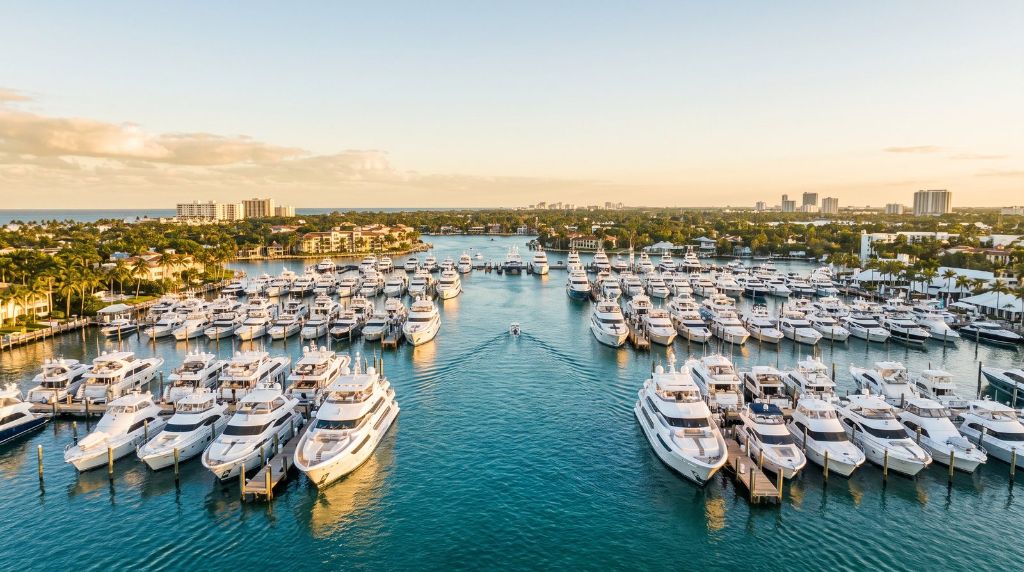
The 67th annual Fort Lauderdale International Boat Show takes place October 28 through November 1, 2026. Bringing more than 1,300 boats and over 100,000 attendees to Fort Lauderdale, the show places South Florida at the center of the international boating community each year.
For some visitors, however, FLIBS inspires a more permanent consideration: what would it look like to make the South Florida waterfront lifestyle your own?
A beautiful residence, an exceptional view and even a private dock are only the beginning. For a boat owner, there is another question that should come first:
Do the property and the boat actually work together?
The boat and the property should be considered together
When I begin working with a waterfront buyer, one of the first things I want to understand is where they are in their boating journey.
If they already own a boat, the vessel becomes an important starting point in the property search. There is little value in falling in love with a waterfront home only to discover that the boat cannot comfortably reach it, fit behind it or be properly accommodated there.
If they are considering purchasing a boat and a waterfront home at the same time, I approach the process differently. Before committing to the vessel, it is worth understanding what type of waterfront property fits comfortably within the overall budget — and what that property can accommodate. A larger vessel can significantly narrow the available real estate, and the home and boat should be considered together before either decision limits the other.
That conversation does not necessarily end at the backyard dock. If keeping the vessel at the property is not the best solution, we can also explore alternatives such as marina dockage or dry storage, allowing the buyer to understand the available options before making either commitment.
From there, the technical details begin to matter.
The year, make and model are only the starting point. I want to know the true length overall (LOA) — including platforms and outboards — as well as the beam, draft and air draft. If a lift is involved, its capacity needs to be considered against the vessel’s weight and dimensions. Shore-power requirements matter too, whether that means 30 amp, 50 amp, dual 50 amp or something more substantial.
Then we look beyond the specifications and consider how the owner actually uses the boat.
Do they require unrestricted ocean access with no fixed bridges? Which inlet do they prefer? How much time are they comfortable spending between their dock and open water? Does the canal provide sufficient room to maneuver comfortably?
And often, it is not simply one vessel. A tender, center console, Jet Skis, paddleboards or kayaks may all need to be accommodated as part of the property.
I also ask a question buyers sometimes overlook:
Is this the largest boat you expect to own?
If the answer is no, I would rather anticipate the future vessel now than find an otherwise exceptional home only for the owner to outgrow its dockage a few years later.
The objective is simple: understand the limitations and the options before creating the shortlist.
“Waterfront” doesn’t always mean your boat will fit
Water frontage on paper and usable water frontage are not necessarily the same thing.
Two homes may each be marketed as having 100 feet on the water and offer very different possibilities to a boat owner. Municipal regulations, setbacks, canal width, dock configuration, water depth, bridge clearance and the dimensions of the vessel itself can all influence what is realistically possible.
Local regulations can also affect how much water frontage is practically usable. In Pompano Beach, for example, current municipal requirements generally restrict docks and watercraft within five-foot extensions of the side property lines, subject to applicable requirements and exceptions. Regulations differ in neighboring Lighthouse Point, where vessel placement, canal width, dock configuration and other property-specific conditions can affect what is possible.
For the owner of a larger boat, nuances such as these can materially influence not only which property works — but which community should be considered in the first place.
Another surprisingly common issue is the vessel’s actual length. A model number does not necessarily represent its true length overall. Platforms, outboards and other equipment can add meaningful length, and those additional feet matter when evaluating dockage.
Community regulations can add another layer. Condominiums, villas and townhome developments may impose their own restrictions on vessel size and dock use.
These are details I prefer to identify early, verify through the appropriate sources and, whenever possible, provide clearly and in writing.
The route to the ocean matters
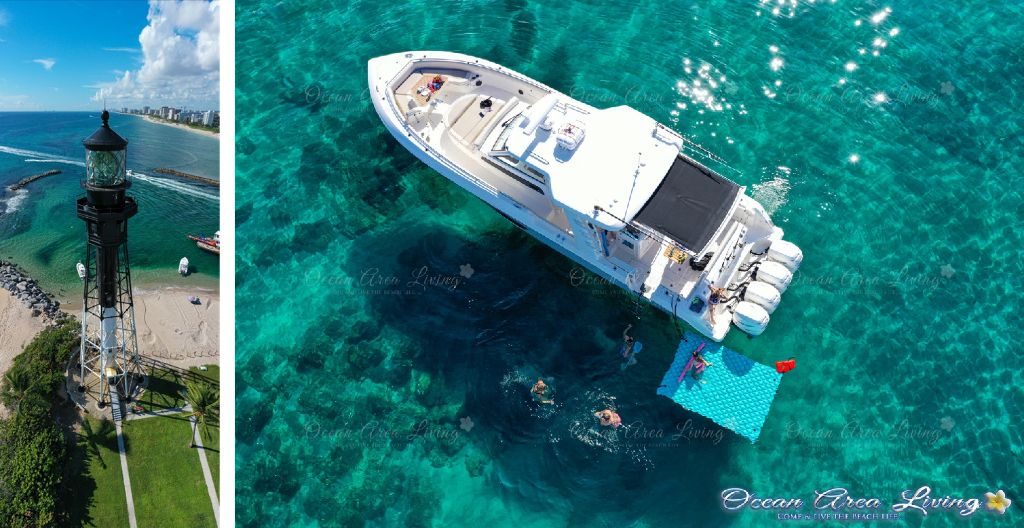
Compatibility is not simply about whether a boat can reach open water. It is about how easily the property supports the way its owner intends to use it.
One of the first questions I ask a serious boater is remarkably simple:
How much time are you willing to spend getting from your dock to the ocean?
The answer can immediately begin to define the search.
If several areas offer comparable running times, we can broaden the scope when inventory in a preferred neighborhood does not provide the right combination of property size, finishes, views and budget.
For serious offshore fishermen, the position of a property within the waterway can become even more significant.
An owner using an in-water live-bait pen, for example, may need to consider tidal exchange and water circulation in addition to travel time, as both can affect the conditions in which bait is kept. Details such as these can make one location particularly well suited to a specific boating lifestyle while another, seemingly comparable property, simply is not.
Around Pompano Beach and Hillsboro Inlet, there are waterfront pockets I particularly value for serious fishermen and yachtsmen because of their relationship to the inlet and tidal waterways.
For a boater, sometimes the position of the lot within the waterway matters just as much as the house itself.
Bridge clearance: verify, don’t assume
“Ocean access” does not necessarily mean that every vessel can make the journey.
Air draft matters. Bridges matter. Tides and water levels matter.
For owners of smaller center consoles, fishing boats, catamarans and performance boats, however, a fixed bridge does not necessarily eliminate a neighborhood from consideration. Depending on the vessel’s air draft, certain areas beyond higher fixed bridges can offer excellent water access while opening up an entirely different collection of waterfront homes.
This is where knowing both the vessel and the waterways becomes particularly valuable. Around Lake Santa Barbara in Pompano Beach, for example, there are several waterfront neighborhoods that can work particularly well for appropriately sized vessels despite fixed-bridge access.
When bridge clearance may be close for a buyer’s vessel, I strongly recommend going beyond what appears on paper and physically verifying the route when appropriate.
If the buyer already owns the boat, that can mean making the run before committing to the property or during the due-diligence period.
If a future vessel has not yet been purchased, marine professionals and other resources can assist in evaluating vessel dimensions, bridge clearances, water depth and other navigational considerations.
When a client’s future boat hadn’t been purchased yet, I’ve arranged for the route to be tested with a comparable vessel, with clearance measured against tidal conditions.
It is an additional layer of due diligence, but an important one.
I would much rather identify a limitation before a purchase than have a client discover it from the helm of their boat afterward.
Local Knowledge begins on the water
My understanding of these waterways began long before my career in real estate.
Raised in Florida and having spent much of my life on the water, I came to understand our coastal communities from the water itself — the inlets, canals, bridges, tides and subtle differences that can make one location particularly well suited to a certain vessel or way of life.
Today, that perspective is an integral part of how I advise waterfront buyers.
Pompano Beach often provides a useful central point when I begin explaining the waterfront communities of northeast Broward County. From there, we can look north or south depending on the vessel, preferred inlet, property requirements and lifestyle.
Pompano Beach offers convenient access toward Hillsboro Inlet together with a diverse collection of waterfront neighborhoods and property types.
To the south, Lauderdale-by-the-Sea offers the character and intimacy of a smaller coastal community, while Fort Lauderdale provides an extraordinary breadth of waterfront living. With approximately 165 miles of navigable waterways and an extensive marine infrastructure, boating is woven into the identity of the city.
To the north, Lighthouse Point offers another established boating community with convenient access toward Hillsboro Inlet, while Hillsboro Beach includes the distinctive ocean-to-Intracoastal properties found along Hillsboro Mile.
Farther north, Deerfield Beach and southern Boca Raton introduce still more waterfront possibilities.
Throughout this stretch of South Florida, life on the water can mean offshore fishing in the morning, diving or snorkeling along the coast, paddleboarding closer to home or simply taking the boat out with no particular destination in mind.
Yet these communities are not interchangeable for a boat owner.
The right waterfront address is ultimately defined by much more than the property itself. The vessel, the route to open water, the characteristics of the waterway and the way an owner intends to live on it all inform the decision.
What should a waterfront buyer know before making an offer?
Before committing to a waterfront property, a boat owner should have a clear understanding of:
- The vessel’s true length overall, including platforms and outboards
- Beam, draft and air draft
- Water depth
- Fixed bridges and other navigational restrictions
- Travel time to the Intracoastal and ocean
- Preferred inlet
- Canal width and turning room
- Usable water frontage
- Dock configuration
- Lift capacity relative to vessel weight
- Shore-power requirements
- Seawall and dock condition
- Relevant permits
- Community or association restrictions
- Space and equipment for tenders, Jet Skis and other water toys
- The possibility of a larger future vessel
Not every one of these questions should be answered by a real estate professional alone. Depending on the property and the issue involved, information may need to be confirmed with the municipality, association, marine contractor, surveyor, engineer or another qualified professional.
My role is to know which questions need to be asked, recognize potential issues early and help my clients assemble the information necessary to make an informed decision.
From FLIBS to life on the water
The Fort Lauderdale International Boat Show is an extraordinary showcase of the boating world, but in South Florida, life on the water continues long after the show closes.
For the right waterfront homeowner, the appeal is ultimately very personal.
It is walking outside and seeing the boat behind the house. It is knowing the inlet is within comfortable reach. It is being able to use the water spontaneously rather than planning around the limitations of the property.
And it is knowing that the home, the dock and the waterway work together to support the life you came here to live.
That is why my approach to waterfront real estate has always been centered on education, local knowledge and full disclosure first.
If you are visiting FLIBS and considering a waterfront home in Fort Lauderdale, Pompano Beach, Lighthouse Point or the surrounding South Florida communities, I would be pleased to help you understand not simply which properties are available — but which ones truly work for you and your boat.
(954) 254-7675
Team Ocean Area Living | Adache Real Estate LLC
Licensed Broker Associate & Advisor